Types de neige à code couleur pour la sélection du fart de ski

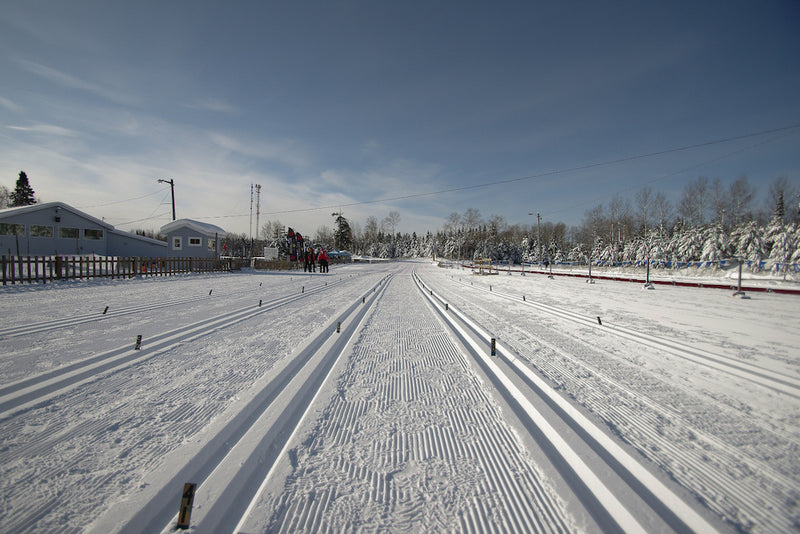
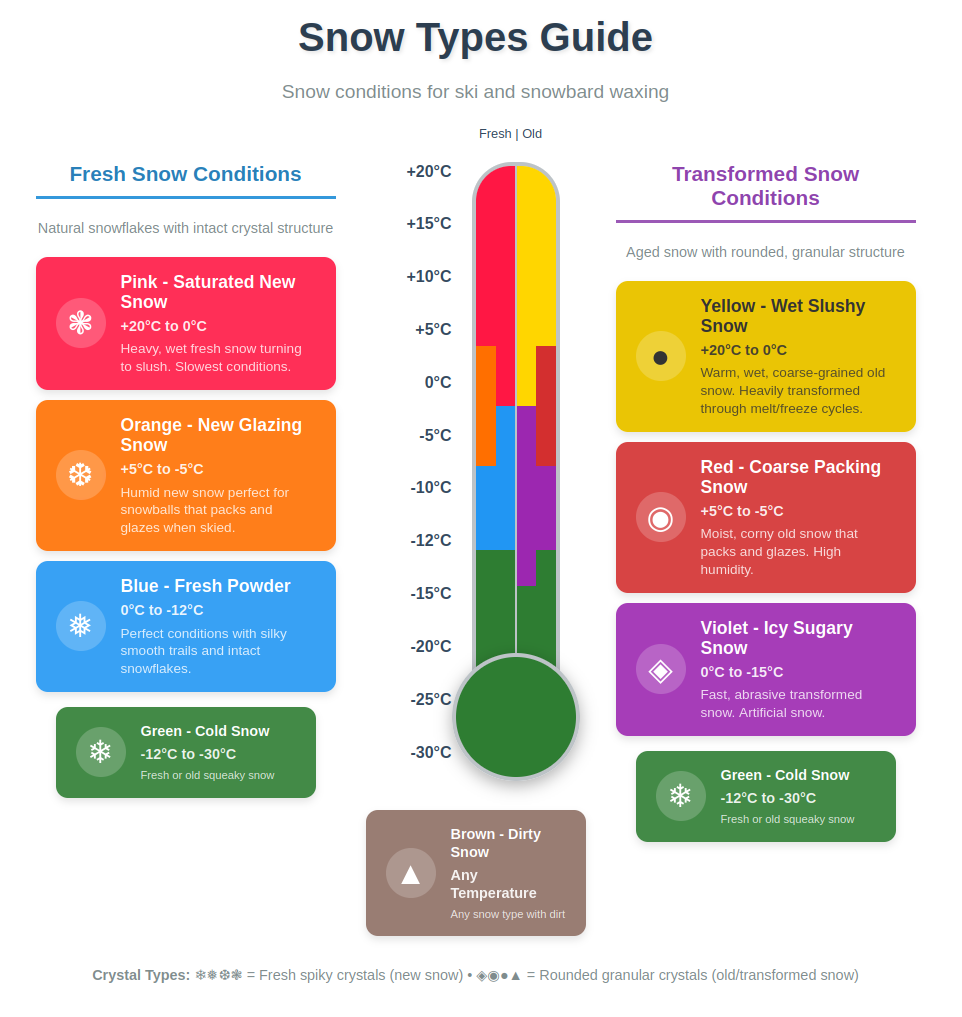
Ce guide explique les types de neige à code couleur utilisés pour classer les farts de ski en fonction des conditions de neige.

Ces couleurs s'alignent sur la série de farts de glisse de Ski*Go et correspondent souvent aux systèmes de codage couleur d'autres grandes marques de farts de ski.

En gardant au moins un fart de glisse et un fart d'adhérence pour chaque type de neige dans votre boîte à fart, vous serez prêt à affronter toutes les conditions que Mère Nature vous réserve.

Pink Snow Conditions (Saturated, New Snow, +20°C to 0°C)

Pink Snow Conditions (Saturated, New Snow, +20°C to 0°C)

Pink Conditions occur when fresh snow becomes thoroughly saturated with water. This happens at temperatures at and well above zero Celsius or in rare circumstances when the ground radiates heat up through the snowpack. The fresh snow is actively melting, turning into slush and hanging on to almost all it's moisture as it melts. The snow is very heavy and it sticks to everything. Pink conditions are the slowest conditions. It takes a lot of energy to force a ski through the high levels of suction friction.
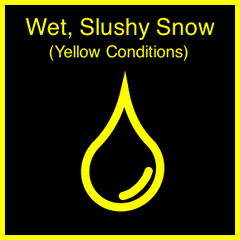
Yellow Snow Conditions (Wet, Slushy, Old Snow, +20°C to 0°C)

Yellow Snow Conditions (Wet, Slushy, Old Snow, +20°C to 0°C)

Yellow conditions occur when old snow is thoroughly saturated with water, it's not to be confused with the other "Yellow Snow". It's slushy, it's wet, it's warm, it's old, it's usually coarse-grained, and it can be dirty. The temperature range for these conditions is 0C to... the warmest it can be with snow on the ground! 'Yellow' snow is heavily transformed. It has been through a melt/freeze cycle or two and has become corny or coarse-grained. Because the snow transformed, it tends to drain better than 'Pink' snow since space between the individual ice crystals allows water to drain away. You're still dealing with a lot of water either way so your main waxing consideration will be to get rid of water from the ski base! One big difference between pink and yellow conditions is that dirt can be a factor being deposited on top of the snowpack. Choosing a wax with compounds to limit the effects of dirt is also key when waxing for yellow conditions if applicable.

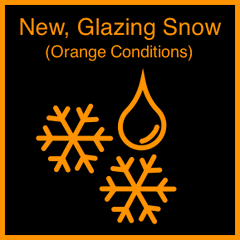
Orange Snow Conditions (New, Glazing Snow, +5°C to -5°C)

Orange Snow Conditions (New, Glazing Snow, +5°C to -5°C)

Orange conditions occur when freshly falling snow or new snow is humid enough to pack/cohere snow. The word to describe this state is "Transforming". This type of snow is perfect for making a snowman or a snowball fight! The natural snow crystal structure is still present - you can still pick up snow from the ground and still find relatively unbroken snowflakes. If left alone, the snow will become wet and break down. When this type of snow is skied over, its high-humidity causes it to pack and glaze. This can be a very tricky condition for waxing. 

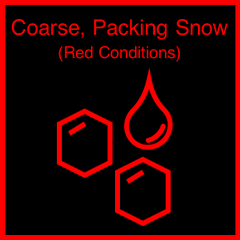
Red Snow Conditions (Coarse, Packing Snow, +5°C to -5°C)

Red Snow Conditions (Coarse, Packing Snow, +5°C to -5°C)

Red conditions occur when old or artificial snow (snow with no discernible flake structure) enters the transition temperature range around zero Celsius. Snow in this range is called 'Transformed'. The track in red conditions tends to be corny, moist, and packs/glazes when skied over. This snow has high cohesion meaning you can pick this snow up and make a snowball though it won't be as 'fluffy' as an orange condition snowball.

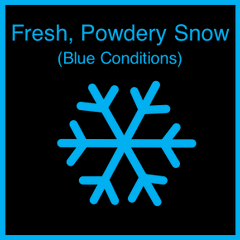
Blue Snow Conditions (Fresh, Powdery Snow, 0°C to -12°C)

Blue Snow Conditions (Fresh, Powdery Snow, 0°C to -12°C)

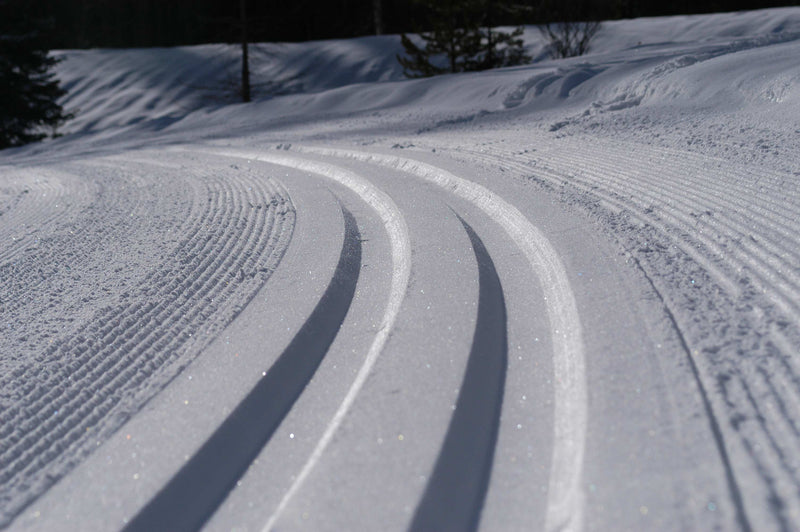
Blue conditions are the days that we all dream of! Fresh, powdery, light snow: the natural snowflake structure is still fully intact. Absolute perfect conditions. The trails are silky smooth and sparkling in the sun. It is difficult to make a snowball because of the lack of moisture. Blue conditions are not so cold that the snow makes a squeaking noise when you step or pole on it. Not too warm, not too cold (and not too humid either). Just right!

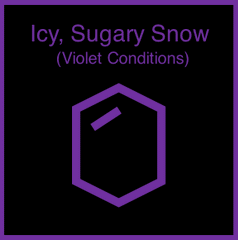
Violet Snow Conditions (Icy, Sugary Snow, 0°C to -15°C)

Violet Snow Conditions (Icy, Sugary Snow, 0°C to -15°C)

Violet conditions are generally not the greatest to ski in. It consists of icy, old snow that breaks up into sugary or corny chunks. This type of snow is old, fully transformed, and very abrasive. Usually, this type of snow has lower humidity but can be higher moisture when icy. Often artificial snow is mixed into this category as using water/ice pellets is how manmade snow is formed. These are the fastest of all conditions, often to the point of being dangerous as skis can't get a good edge in it. Waxes for this condition are coloured purple by most wax brands.

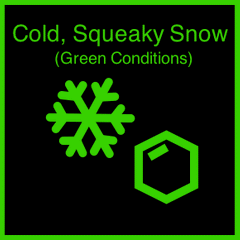
Green Snow Conditions (Cold, Squeaky Snow, -12°C to -30°C)

Green Snow Conditions (Cold, Squeaky Snow, -12°C to -30°C)

Green conditions are the coldest conditions. This snow has a very destinctive squeak when compressed, whether under ski or pole. It can be new, old, or man made snow, but it is usually very dry. The harder the wax, the better it will be in these conditions. Green conditions are quite abrasive. Waxes need to be able to handle abrasion well to allow you to ski normally. These waxes are coloured green by most of the major wax brands. Keep warm by keeping your skis moving!

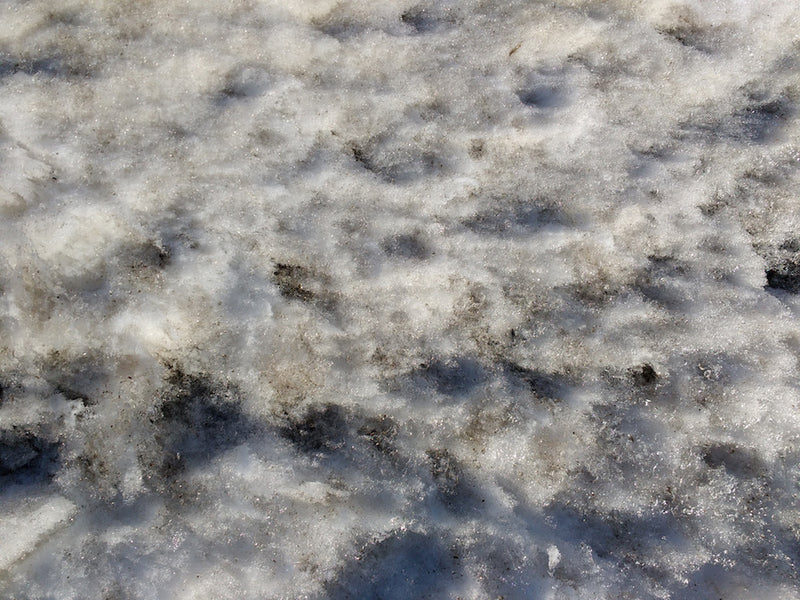
Brown Snow Conditions (Dirty Snow, Any Temperature)

Brown Snow Conditions (Dirty Snow, Any Temperature)

Brown conditions are a quasi-condition. Brown conditions can either be: yellow, red, violet, or green conditions mixed with dirt. Blue, orange, and pink conditions are very rarely wrapped in brown conditions because new snow is almost never dirty.