
Blue Snow Conditions (Fresh, Powdery Snow, 0°C to -12°C)
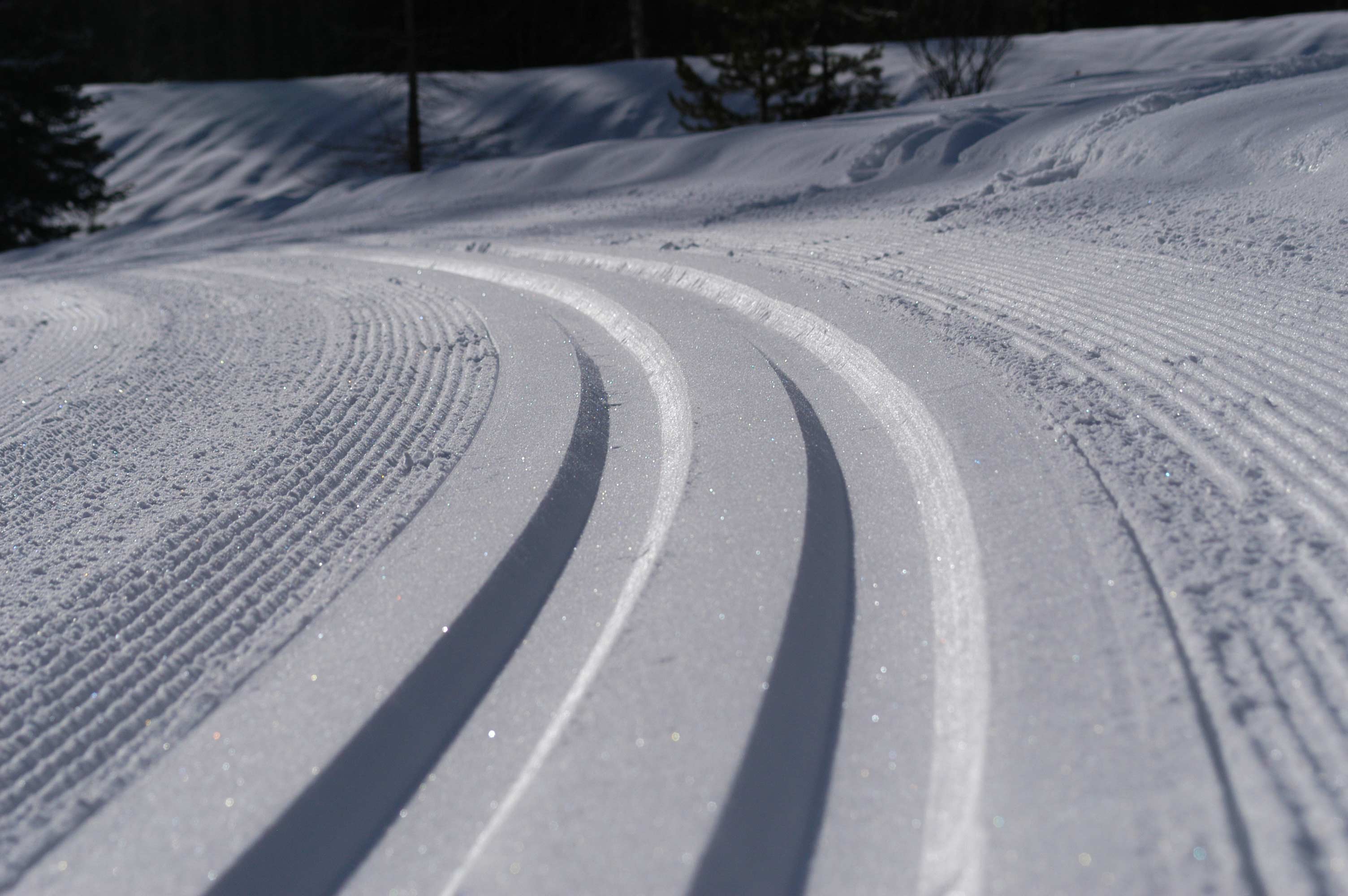
Blue conditions are the days that we all dream of! Fresh, powdery, light snow: the natural snowflake structure is still fully intact. Absolute perfect conditions. The trails are silky smooth and sparkling in the sun. It is difficult to make a snowball because of the lack of moisture. Blue conditions are not so cold that the snow makes a squeaking noise when you step or pole on it. Not too warm, not too cold (and not too humid either). Just right!
-
Friction Characteristics
New snow crystals in this temperature range with medium to low humidity are like a million tiny knives to your ski bases. Kinetic friction is the main kind of friction to deal with. A good, hard-natured wax that will remain durable and keep the sharp knives of the snow crystals out of your ski base is what you need. Blue conditions are usually the easiest to wax for because the waxes are so hard. Snow in these conditions can be dry meaning a graphite wax is often used to minimize static friction.
-
Kick Waxing
Kick waxing is dead easy in blue conditions. Hardwax sings! If you're skiing over 15km, use a non-aggressive base binder. Aside from that, it shouldn't be too hard to find a hardwax that gives you good grip and glide. If the snow is pretty fresh fallen, you may need a tar wax to keep snow from building up under your wax pocket. If the blue wax you chose is dragging a bit, you may consider covering with a harder green grip wax to help reduce the kinetic friction.
-
Choosing Skis
A universal ski is ideal for these conditions. The snow isn't hard enough yet to consider a hardtrack, and is rarely soft enough to consider a soft track ski. If it is fresh falling, you may want a soft track ski to help float over. A classic ski can be low camber as it will never see a drop of klister. Structure isn't unheard of in cold conditions but is rare. A specific cold-snow base grind is common among racers which will perform better with the lower moisture and finer grains.